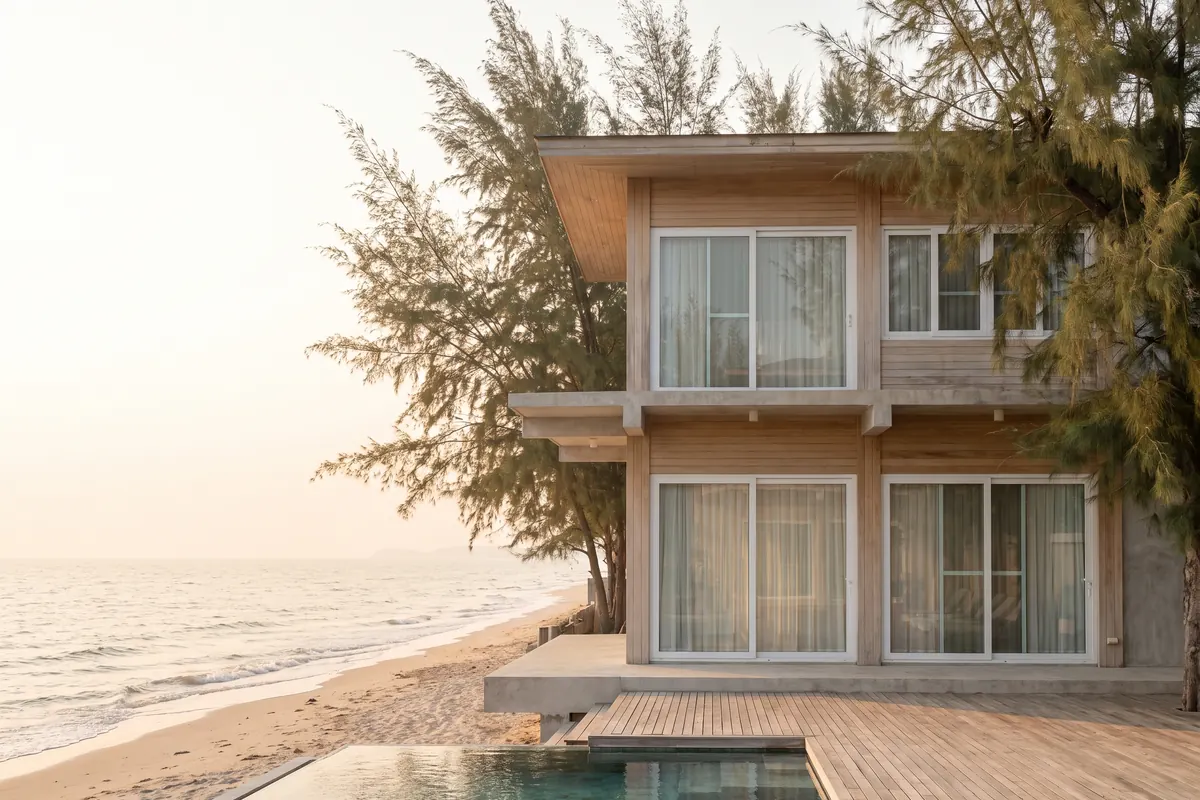
Why uPVC
The smart choice for coastal Thailand.
Hua Hin's climate punishes ordinary windows. Here's why uPVC is the material more and more homeowners, builders and architects choose.
Five things Hua Hin throws at your windows
-
Fierce sun & heat
uPVC is a natural insulator. Multi-chamber frames and double glazing slow heat getting in, so rooms stay cooler and your air-con works less.
Frame conducts ~1,000× less heat than aluminium
-
Salt sea air
Nothing to rust, pit or corrode. Frames stay smooth and bright metres from the beach, where aluminium and steel quickly deteriorate.
Ideal for beachfront and sea-view homes
-
Monsoon storms
Continuous rubber gaskets and engineered drainage channels keep driving rain out, with steel-reinforced frames that stay rigid in strong winds.
Weather-sealed on every sash
-
Humidity & termites
uPVC can't rot, swell, warp or be eaten. No sanding, staining or repainting — just a wipe with soapy water now and then.
No painting, ever
-
Traffic & noise
Double glazing and tight seals take the edge off scooters, traffic and neighbours. Acoustic glass is available for bedrooms facing busy roads.
Quieter, better sleep
Energy
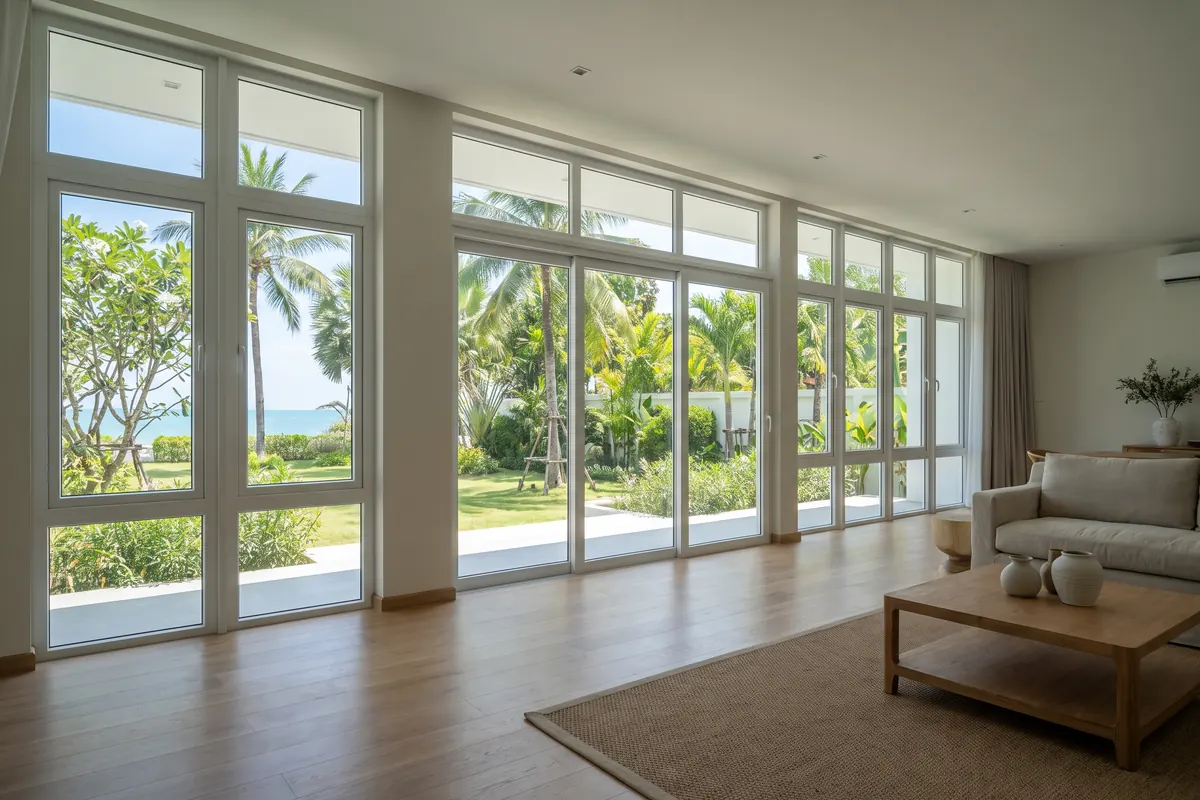
Keep the cool in, pay less to run it.
Most of the heat that gets into a Thai home comes through the windows: radiant heat through the glass, and conducted heat through the frame. Aluminium is an excellent conductor — around a thousand times more so than uPVC — so an aluminium frame in the afternoon sun effectively becomes a radiator.
A multi-chamber uPVC frame with double glazing tackles both. Add Low-E solar-control glass on sun-facing elevations and your air-conditioning has far less work to do. The exact saving depends on your home's orientation, shading and glass, and we'll talk you through it honestly at your survey.
- Insulating multi-chamber frames
- Double glazing as standard
- Low-E solar-control upgrades
- Airtight seals stop cool air escaping
Inside the frame
Engineering you won't see — but will feel.
Tap the numbers to see what's inside a quality uPVC window and why it keeps the heat, noise and rain outside.
The honest comparison
uPVC vs aluminium vs timber, by the coast.
All three have their place. Here's how they stack up in a hot, humid, salty climate like Hua Hin's.
| — | uPVC | Aluminium | Timber |
|---|---|---|---|
| Heat insulation | 5/5 — Excellent — natural insulator | 1/5 — Poor — conducts heat indoors | 4/5 — Good |
| Salt-air resistance | 5/5 — Won't rust or corrode | 2/5 — Corrodes without costly coatings | 3/5 — Weathers; needs sealing |
| Humidity & termites | 5/5 — Unaffected | 5/5 — Unaffected | 1/5 — Can swell, rot and attract termites |
| Noise reduction | 5/5 — Excellent with double glazing | 3/5 — Fair | 4/5 — Good |
| Maintenance | 5/5 — Wipe clean, no painting | 4/5 — Low, until corrosion starts | 1/5 — Regular sanding & repainting |
| Value over time | 5/5 — Low cost, long life | 3/5 — Higher upfront, energy loss | 2/5 — Ongoing upkeep costs |
Low maintenance, long life
uPVC is UV-stabilised, colour-fast and can't rot or rust. There's no painting, varnishing or sanding — ever. Wipe the frames with warm soapy water a few times a year, keep the tracks clear of sand and leaves, and give the hardware a light lubrication annually.
- No painting or varnishing
- Won't rot, warp, rust or corrode
- Termite-proof
- Recyclable at end of life
Let's make your home cooler and quieter.
Book a free, no-obligation survey. We'll measure up, talk through options and send a clear written quote.